Machairado — The Church, the Bell Tower, and the Unmoved Centre
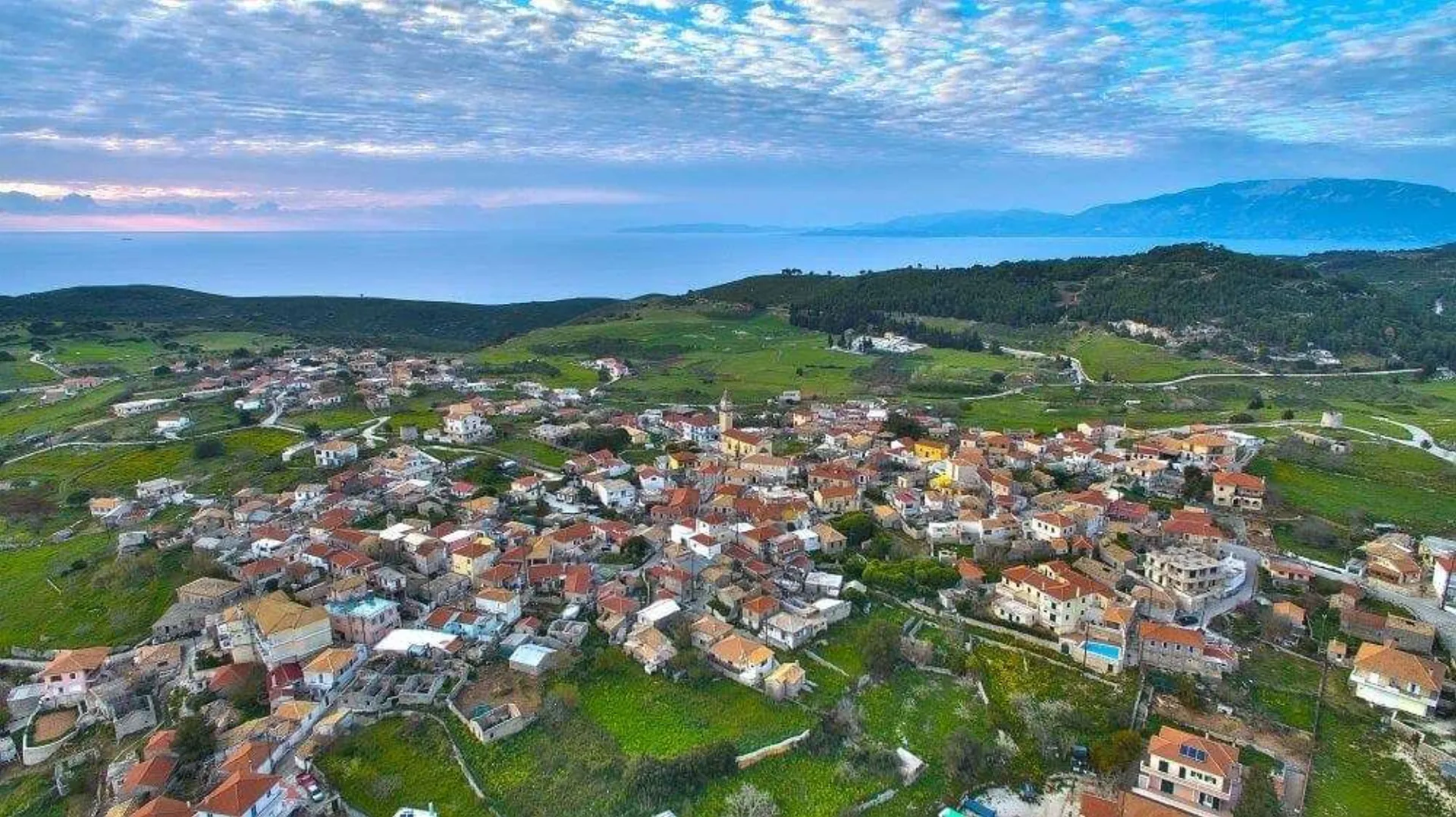
Machairado sits in the middle of Zakynthos’ fertile central plain, surrounded by olive groves, vineyards, and small farms. It’s the kind of village that tourists drive through on the way to somewhere else — the west-coast cliffs, the northern mountains, the beach resorts — without registering that it exists. There are no signs advertising it, no tour buses stopping, no beach to draw visitors.
This is exactly why it’s worth visiting. Machairado is the most authentically traditional settlement on Zakynthos, a place where the rhythm of life still follows the agricultural calendar, where the kafeneion opens at dawn and the church bells ring for vespers, and where the most important event of the year is the village panegyri (festival) rather than the tourist season.
The Church of Agia Mavra
The church of Agia Mavra (Saint Mavra) is the most significant religious building on Zakynthos. Built in the 14th century, it is one of the very few structures on the island to have survived the devastating earthquake of 1953 substantially intact. While Zakynthos Town was reduced to rubble and virtually every church on the island collapsed, Agia Mavra stood.
Locals attribute this to the saint’s protection. Engineers attribute it to the church’s unusually thick walls and low centre of gravity. The effect is the same: you walk into a building that has been in continuous use for over six hundred years, with its original stone walls, its painted interior, and its accumulated layers of devotion undisturbed.
The church interior is dark, cool, and atmospheric — candles, icons, the smell of incense, and the quiet of a space that has absorbed centuries of prayer. The iconostasis (altar screen) is carved wood with gilded panels, and the icons include several of significant age and artistic quality.
The Bell Tower
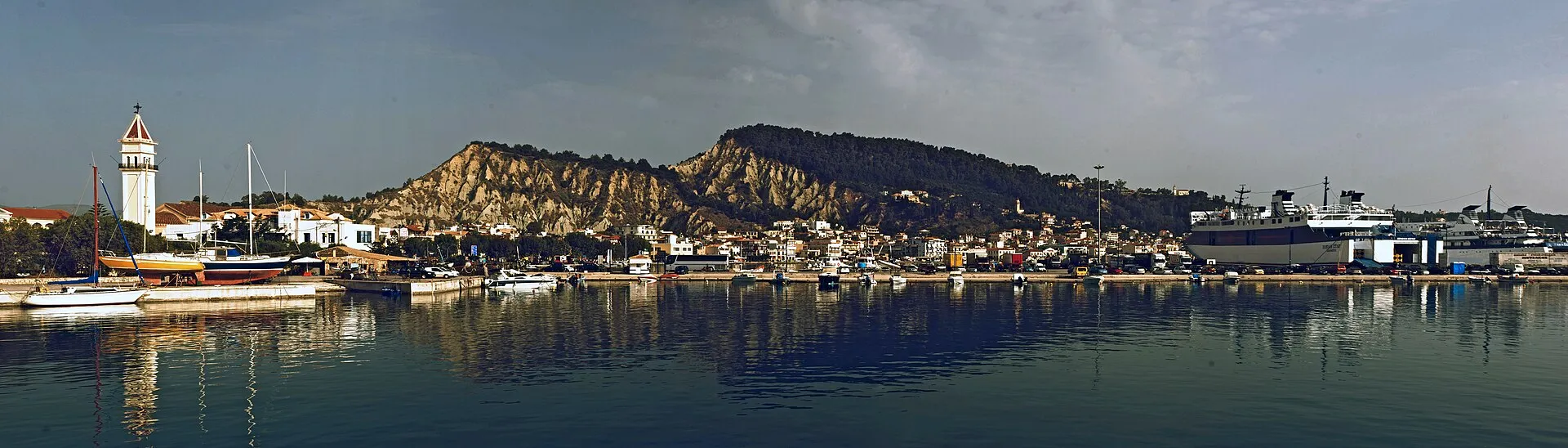
Outside the church, the bell tower is the structure that stops people in their tracks. Built in the Venetian period, it’s a freestanding campanile of exceptional elegance — taller and more refined than you expect to find in a rural village, with arched openings at each level, a stone balustrade, and a pointed roof visible from kilometres away across the plain.
The bells are still rung by hand — one of the last churches in Greece to maintain this tradition. On Sundays and feast days, the bellringer climbs the tower and produces a sound that carries across the entire valley. If you’re anywhere within hearing distance on a Sunday morning, you’ll know it.
The Village
Machairado has a simple layout: the church and bell tower at the centre, a plateia (square) with a kafeneion, and residential streets radiating outward into olive groves. The houses are typical of inland Zakynthos — stone-built, with walled gardens, pergolas heavy with grapevines, and the occasional elaborate doorway surviving from wealthier periods.
The kafeneion is the village’s social centre. Old men play tavli (backgammon) under the plane tree, women stop to talk after church, children run around the square. Tourism has not reached here in any meaningful way, and the kafeneion’s prices reflect this: a Greek coffee costs what a Greek coffee should cost.
The Panegyri
The festival of Agia Mavra — held on the first Saturday after Easter — is the biggest village celebration on the island. The church service, the procession through the streets with the saint’s icon, the feast in the square, the music and dancing that continues until dawn — this is rural Greek Orthodoxy at its most vibrant.
Visitors are welcome, but this is a local event. Dress respectfully for the church service, eat what’s offered, and understand that you’re witnessing something authentic rather than performing in something staged.
Getting There
Machairado is 10 kilometres west of Zakynthos Town — about 15 minutes by car on the inland road. There is no regular bus service. The village is on the route to the west coast (Porto Limnionas, Kambi) and makes a natural stop on a day exploring the island’s interior.